Your Passport to American Hospitality: Hotel Jobs That Welcome International Workers
Searching for a legitimate pathway to work in the United States? Tired of vague promises and confusing visa information? Ready for clear answers about real opportunities that actually exist?
Hotel jobs in the USA with visa sponsorship offer one of the most accessible routes for international workers to build American careers. With wages ranging from $15 to $22 per hour, comprehensive benefits packages, and genuine opportunities for advancement, the hospitality industry actively recruits foreign workers to fill positions that domestic labor can’t satisfy.
This isn’t about seasonal farm work or temporary gigs. We’re talking about year-round employment at recognizable hotel brands, resort properties, and hospitality companies that have established visa sponsorship programs specifically to bring talented international workers to America.
In this complete guide, you’ll discover exactly which hotels sponsor visas, what positions pay the highest wages, how the H-2B visa process actually works for hospitality jobs, and most importantly, the step-by-step strategy for positioning yourself as an irresistible candidate worth sponsoring from abroad.
Understanding the Hotel Industry Visa Sponsorship Landscape
The American hospitality industry faces persistent labor shortages, particularly in resort areas, seasonal destinations, and regions with tourism peaks that exceed local workforce capacity. This reality drives hotels to actively participate in visa sponsorship programs, making hospitality one of the most foreigner-friendly employment sectors in the United States.
Why Hotels Sponsor International Workers
Hotels invest in visa sponsorship for several compelling reasons. First, they need reliable workers when domestic applications can’t fill open positions. Second, international workers often demonstrate exceptional work ethic and commitment, knowing the opportunity cost of losing sponsored employment. Third, multilingual staff enhance guest experiences in an increasingly global tourism market.
This creates genuine opportunity for you. Hotels aren’t doing you a favor—they need you as much as you need them.
Visa Types for Hotel Employment: H-2B and Beyond
Understanding which visa category applies to your situation is crucial for targeting the right opportunities.
H-2B Temporary Non-Agricultural Worker Visa
The H-2B visa program dominates hotel industry sponsorship. This visa allows US employers to bring foreign workers for temporary or seasonal non-agricultural work when American workers aren’t available.
Key H-2B characteristics:
- Valid for the period of approved work, up to one year initially
- Extendable up to three years total
- Requires job offer from US employer with approved petition
- Employer pays most sponsorship costs
- Available to nationals from designated countries (check current USCIS eligible countries list)
Hotel positions commonly using H-2B visas:
- Housekeepers and room attendants
- Front desk associates
- Food service workers
- Banquet staff
- Kitchen helpers
- Groundskeepers and maintenance workers
- Laundry attendants
J-1 Exchange Visitor Program
Some hotels participate in J-1 cultural exchange programs, offering temporary work-training opportunities that include hospitality positions. These typically target students or young professionals seeking international experience rather than permanent immigration pathways.
J-1 program features:
- Duration of 12-18 months typically
- Emphasizes cultural exchange and training
- Often includes program fees paid by participant
- More accessible for young workers (usually under 30)
- Requires return to home country after program completion
H-1B Specialty Occupation Visas for Management
Higher-level hotel management positions occasionally use H-1B visas for roles requiring bachelor’s degrees in hospitality management, business, or related fields. These positions pay significantly more ($50,000-$80,000+ annually) but require advanced qualifications.
Salary Breakdown: What $15-$22 Per Hour Really Means
Let’s translate hourly wages into realistic annual income and lifestyle expectations.
Entry-Level Positions ($15-$17/hour)
Typical roles: Housekeepers, laundry attendants, kitchen helpers, banquet setup staff
Annual income at $15/hour:
- 40 hours weekly = $600/week = $31,200/year (before taxes)
- With overtime (5 hours weekly) = $712.50/week = $37,050/year
Annual income at $17/hour:
- 40 hours weekly = $680/week = $35,360/year
- With overtime (5 hours weekly) = $808.50/week = $42,042/year
These wages support basic living in most American markets, especially with shared housing and careful budgeting. Resort areas with employer-provided housing significantly improve your financial situation.
Mid-Range Positions ($18-$20/hour)
Typical roles: Front desk associates, experienced housekeepers, restaurant servers, breakfast attendants, guest services
Annual income at $19/hour (midpoint):
- 40 hours weekly = $760/week = $39,520/year
- With overtime and tips (where applicable) = $45,000-$50,000/year potential
At this level, you’re earning solidly middle-class American income, capable of supporting yourself comfortably and sending significant money home if desired.
Higher-End Positions ($20-$22/hour)
Typical roles: Lead housekeepers, front desk supervisors, experienced food service workers, maintenance technicians
Annual income at $21/hour:
- 40 hours weekly = $840/week = $43,680/year
- With overtime = $50,000-$55,000/year potential
This wage level provides comfortable living standards in most American markets, ability to save meaningfully, and financial stability for long-term planning.
Additional Compensation Factors
Tips: Front desk, concierge, and food service positions often receive gratuities significantly increasing total compensation. Servers and bartenders can earn $5-$15/hour additional income from tips.
Free or subsidized housing: Many resort hotels provide employee housing, dramatically reducing your living expenses and increasing savings potential.
Free meals: Some hotels offer employee meals during shifts, saving $150-$300 monthly on food costs.
Benefits packages: Health insurance, paid time off, and retirement contributions add thousands in annual value beyond base wages.
Top Hotel Chains and Employers Offering Visa Sponsorship
Not all hotels sponsor international workers, but several major brands and resort operators actively participate in H-2B and other visa programs.
Major Hotel Brands With Sponsorship History
Marriott International Properties: As one of the world’s largest hotel companies, various Marriott-brand properties (Marriott, Ritz-Carlton, Westin, Sheraton) sponsor H-2B workers, particularly at resort locations. Wages typically $16-$22/hour depending on position and location.
Hilton Hotels & Resorts: Multiple Hilton properties participate in visa sponsorship programs, especially seasonal resort locations. Starting wages $15-$20/hour for entry to mid-level positions.
Hyatt Hotels Corporation: Hyatt properties, particularly larger resorts and convention hotels, occasionally sponsor international workers for various hospitality positions at competitive wages.
Independent Resort Properties: Many non-chain luxury resorts and destination properties actively sponsor workers, sometimes offering higher wages ($18-$25/hour) and better housing arrangements than chain hotels.
Geographic Hotspots for Hotel Visa Sponsorship
Florida (Orlando, Miami, Key West): Theme park resorts, beach properties, and cruise ship departure cities create massive hospitality employment. Year-round warm weather tourism means consistent opportunities.
Hawaii: Island resort properties heavily depend on imported labor due to limited local workforce. Higher wages ($18-$24/hour) but significantly higher cost of living.
Colorado (Vail, Aspen, Breckenridge): Ski resort towns sponsor hundreds of international workers annually for winter season positions. Wages $16-$22/hour with often-included housing.
National Parks and Resort Areas: Properties near Yellowstone, Grand Canyon, Yosemite, and other major tourist destinations regularly use H-2B programs. Remote locations typically include employer housing.
Las Vegas, Nevada: Casino resorts and hotel properties employ thousands in hospitality roles, with some participating in visa programs for hard-to-fill positions.
Coastal Resort Areas: Cape Cod (Massachusetts), Outer Banks (North Carolina), Myrtle Beach (South Carolina), and other beach destinations have strong seasonal demand.
Hotel Job Positions Explained: Finding Your Best Fit
Different hotel roles require different skills, offer varying wages, and present distinct career advancement opportunities.
Housekeeping and Room Attendants
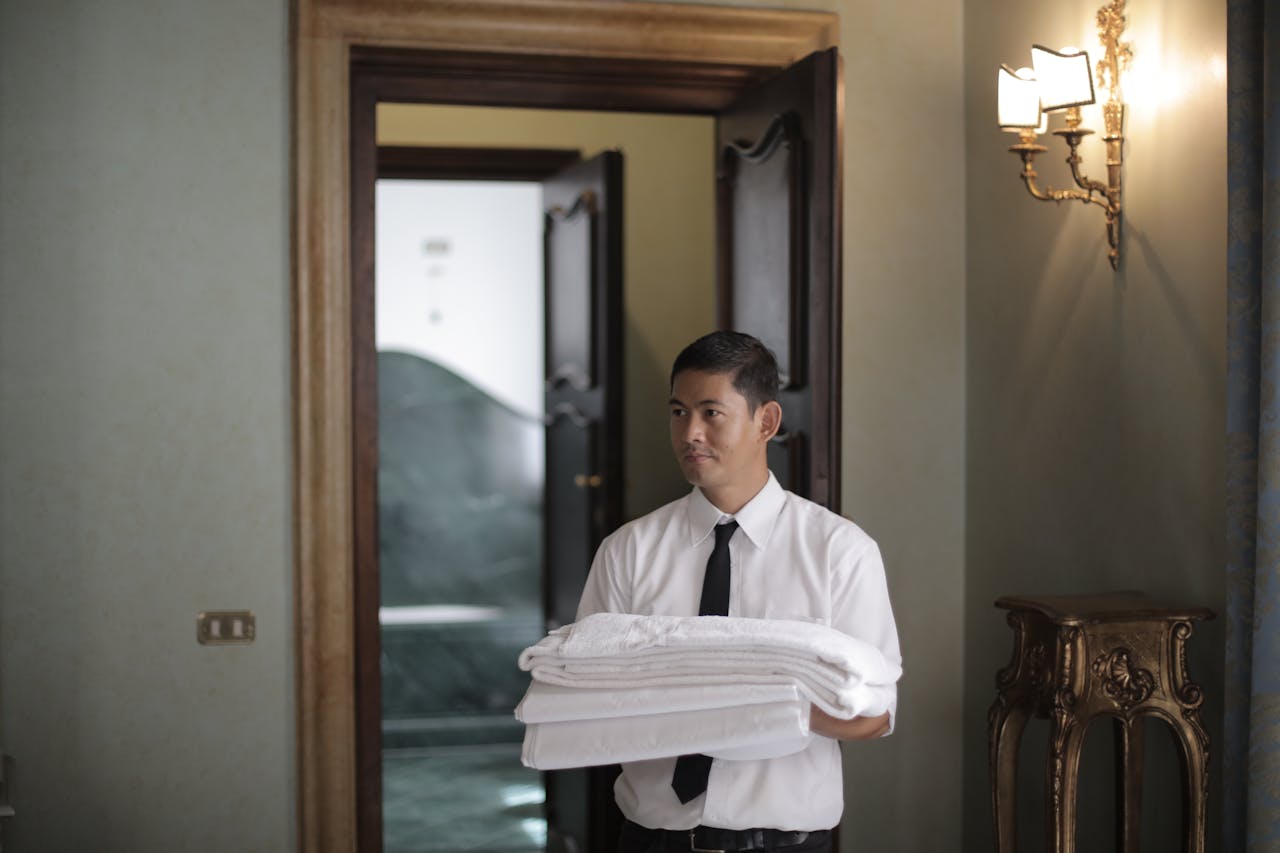
Responsibilities: Cleaning guest rooms, changing linens, restocking amenities, maintaining cleanliness standards, reporting maintenance issues.
Wages: $15-$18/hour typically, higher in resort locations
Physical demands: High—constant movement, bending, lifting, repetitive motions
Advancement potential: Lead housekeeper, housekeeping supervisor, eventually executive housekeeper
Best for: Those who prefer independent work, take pride in attention to detail, and have strong work ethic
Housekeeping represents the largest category of hotel H-2B sponsorship. While physically demanding, positions are plentiful and provide stable income with clear advancement pathways.
Front Desk and Guest Services
Responsibilities: Checking guests in/out, handling reservations, answering questions, resolving complaints, processing payments, providing local information.
Wages: $16-$21/hour depending on hotel tier and location
Skills needed: Customer service orientation, basic English proficiency, computer literacy, professional demeanor
Advancement potential: Front desk supervisor, guest services manager, operations management
Best for: People-oriented individuals with good communication skills and professional appearance
Front desk positions offer better wages, less physical labor, and faster advancement opportunities than housekeeping, but require stronger English skills and customer interaction abilities.
Food Service and Banquet Staff
Responsibilities: Setting up dining areas, serving food and beverages, bussing tables, banquet room preparation, maintaining food service standards.
Wages: $15-$19/hour base, plus potential tips significantly increasing total earnings
Physical demands: Moderate to high—standing, carrying trays, fast-paced during meal periods
Advancement potential: Server, bartender, food service supervisor, restaurant manager
Best for: Those who work well under pressure, enjoy guest interaction, and want tip income potential
Food service positions often provide the highest total compensation when tips are factored in, making them financially attractive despite challenging work conditions.
Maintenance and Engineering
Responsibilities: Repairing equipment, maintaining facilities, handling guest maintenance requests, preventive maintenance, groundskeeping.
Wages: $18-$24/hour depending on skills and certifications
Skills needed: Basic repair knowledge, electrical/plumbing experience helpful, safety consciousness
Advancement potential: Lead maintenance technician, chief engineer, facilities manager
Best for: Mechanically inclined individuals with problem-solving skills and technical aptitude
Maintenance positions offer higher wages and more job security, as these skills are harder to find than housekeeping or front desk abilities.
The Real Story: Carlos’s Journey From Mexico City to Mountain Resort
Carlos worked in Mexico City hotels for five years, earning wages that barely covered rent for his family’s small apartment. He dreamed of better opportunities but didn’t know how to access them.
A former coworker told him about H-2B visa opportunities at American ski resorts. Skeptical but desperate, Carlos researched companies hiring for winter seasons. He found a Colorado resort property advertising housekeeping positions with visa sponsorship at $17/hour plus free employee housing.
Carlos applied in July for the November start date. The resort’s HR department guided him through the process: background checks, paperwork, waiting for visa approval. In October, his H-2B visa was approved. By November, Carlos was living in employee dorm housing in the Rocky Mountains, earning more in two weeks than he’d made in a month back home.
“The first month was overwhelming,” Carlos remembers. “The altitude made me exhausted, the work was harder than Mexico, and I missed my family terribly. But I was saving $1,500 monthly even after sending money home.”
After two seasons, Carlos learned enough English to apply for front desk positions. His insider knowledge of housekeeping operations impressed hiring managers. He transferred to the front desk at $19.50/hour, no longer doing physical room cleaning.
Now completing his third year, Carlos recently married another hotel employee (also on an H-2B visa), and they’re both working with an immigration attorney to apply for EB-3 green cards through their employer sponsorship.
“Hotel work gave me opportunities I never imagined,” Carlos says. “It wasn’t easy, but it changed everything for my family.”
Application Strategy: How to Actually Get Hired With Sponsorship
Understanding where opportunities exist is useless without knowing how to successfully apply. Here’s your strategic roadmap.
Finding Legitimate Opportunities
Direct employer websites: Visit career pages of major hotel chains and search for “visa sponsorship” or look specifically at resort locations known for H-2B hiring.
H-2B recruitment agencies: Legitimate agencies specializing in hospitality placements connect international workers with sponsoring employers. Research agencies carefully to avoid scams.
Hospitality job boards: Websites like Hcareers.com, HospitalityOnline.com, and CoolWorks.com list resort and hotel positions, sometimes indicating visa sponsorship availability.
Department of Labor H-2B disclosure data: Public records show which hotels filed H-2B applications, indicating active sponsorship programs.
Crafting Your Application
Resume essentials:
- Any previous hospitality experience (hotels, restaurants, customer service)
- English language proficiency level (be honest)
- Special skills (housekeeping training, front desk experience, food service, etc.)
- Work history showing reliability and longevity
- Professional references from previous employers
Cover letter focus:
- Express specific interest in the hotel and location
- Acknowledge need for visa sponsorship upfront (don’t hide this—employers already know they’re sponsoring)
- Highlight relevant experience and willingness to work hard
- Explain why you’re interested in this particular opportunity
Interview Preparation
Hotel interviews for sponsored positions typically focus on reliability, work ethic, and culture fit rather than extensive hospitality knowledge.
Expected questions:
- Why do you want to work in the United States?
- Can you describe your previous hospitality or customer service experience?
- How do you handle repetitive tasks or physically demanding work?
- Are you flexible with scheduling including weekends, holidays, and varied shifts?
- What are your long-term goals?
Your questions to ask:
- What does the visa sponsorship process look like and timeline?
- Is employee housing provided, and what are the costs if any?
- What are typical working hours and overtime opportunities?
- What benefits are included for H-2B workers?
- Are there opportunities for advancement or extended employment?
Living and Working in American Hotels: Realistic Expectations
Success in sponsored hotel employment requires understanding both opportunities and challenges.
Working Conditions and Culture
American hotels maintain high cleanliness and service standards. You’ll face productivity expectations, quality checks, and performance evaluations. Punctuality is non-negotiable—being late or missing shifts can jeopardize your visa status.
Workplace culture elements:
- Direct communication expectations
- Strong emphasis on safety protocols
- Teamwork and cooperation with diverse coworkers
- Professional interactions with guests regardless of personal feelings
- Following procedures and reporting issues properly
Housing Arrangements
Many resort hotels provide employee housing as part of the employment package. This dramatically improves your financial situation but comes with rules and shared living arrangements.
Typical employee housing:
- Dormitory-style rooms shared with 1-3 other workers
- Communal kitchens and bathrooms
- Basic furnishing provided
- Cost: $200-$500 monthly deducted from paychecks (significantly below market rent)
- Rules about guests, noise, cleanliness
If employer housing isn’t provided, you’ll need to arrange your own accommodation. Sharing apartments with coworkers is common and financially necessary on entry-level wages.
Building Your American Life
Success extends beyond just doing your job. Building connections, managing finances wisely, and preparing for long-term goals separate those who merely survive from those who truly thrive.
Community connections: Seek out cultural communities from your home country for support and friendship. Hotels often employ workers from various nations, creating multicultural workplaces.
Financial management: Open a US bank account, establish a budget, track expenses carefully, and save consistently. Send money home through legitimate services like Western Union or Wise (formerly TransferWise) rather than informal channels.
English improvement: Use free resources like library conversation groups, language apps, or community college ESL classes to improve communication skills. Better English directly correlates with advancement opportunities.
Professional development: Some hotels offer training programs, certifications, or tuition assistance. Take advantage of everything available to increase your value and opportunities.
Advancement and Long-Term Opportunities in Hospitality
Entry-level hotel positions can become launching pads for substantial hospitality careers if you’re strategic and committed.
Career Progression Pathways
Within Operations: Entry-level → Lead/Senior-level → Supervisor → Assistant Manager → Department Manager → General Manager
This progression can happen over 5-10 years for motivated employees who consistently perform, develop leadership skills, and take on additional responsibilities.
Specialization Routes:
- Housekeeping: Executive Housekeeper ($45,000-$65,000)
- Front Desk: Front Office Manager ($40,000-$60,000)
- Food & Beverage: Restaurant Manager ($45,000-$70,000)
- Sales: Hotel Sales Manager ($50,000-$75,000)
Transferable Skills: Hotel experience develops customer service, problem-solving, multicultural communication, and operational management skills valuable across industries. Many hotel workers eventually transition to other sectors with better compensation.
Path to Permanent Residency
Some hotel employers sponsor reliable long-term employees for EB-3 green cards, offering potential permanent US residency. This isn’t guaranteed and takes years, but represents the ultimate opportunity for those seeking permanent American immigration.
EB-3 sponsorship typically requires:
- Several years of consistent employment with the hotel
- Excellent performance and reliability record
- Employer willingness to invest in sponsorship costs ($5,000-$10,000)
- Meeting all USCIS requirements
- Patience through multi-year processing times
Warning Signs: Avoiding Hotel Job Scams
Unfortunately, visa sponsorship attracts fraudulent schemes. Protect yourself by recognizing red flags.
Legitimate employers never:
- Charge you fees for job offers or visa sponsorship
- Guarantee visa approval or promise unrealistic wages
- Request money transfers or bank account information during applications
- Use personal email addresses instead of company domains
- Pressure you to decide immediately without time to research
Verify legitimacy by:
- Checking if the hotel actually exists with independent searches
- Confirming the company filed H-2B applications (public DOL records)
- Researching company reviews and reputation
- Speaking directly with hotel HR departments through verified phone numbers
- Being skeptical of offers that seem too good to be true
If something feels wrong, trust your instincts and walk away. Legitimate opportunities exist—you don’t need to accept suspicious offers.
FAQs About Hotel Jobs with Visa Sponsorship
Q: Do I need hospitality experience to get hired with visa sponsorship?
A: While previous hotel or customer service experience strengthens your application, many entry-level positions (especially housekeeping) require no prior hospitality experience. Employers value work ethic, reliability, and willingness to learn over specific experience. Emphasize any customer-facing roles, attention to detail, or physical labor experience you have.
Q: How much does the H-2B visa process cost for workers?
A: Legitimate employers pay most H-2B costs including petition fees, but you’re typically responsible for visa application fees at the US embassy/consulate ($190 currently) and travel costs to your home country’s US embassy for the visa interview. Some employers reimburse visa fees after successful employment periods. Never pay recruiters or employers directly for job placement.
Q: Can my family come with me on a hotel H-2B visa?
A: H-4 dependent visas allow your spouse and unmarried children under 21 to accompany you. However, H-4 holders cannot work legally in the US, meaning you must support your family entirely on your wages. Many workers initially come alone, establish financial stability, and bring family later. Consider carefully whether your wages can support dependents before bringing family.
Q: What happens after my H-2B visa expires?
A: H-2B visas are temporary, lasting up to one year with possible extensions to three years total. After that, you must either return to your home country, find an employer willing to sponsor a different visa type, or qualify for a green card if your employer sponsors permanent residency. Plan your long-term strategy before your visa expires to avoid complications.
Q: Which hotel positions pay the highest wages with visa sponsorship?
A: Among entry-level positions typically sponsored through H-2B programs, front desk associates ($17-$21/hour) and food service positions with tip income ($15-$19/hour base plus $5-$15/hour tips) generally pay highest. Maintenance positions pay well ($18-$24/hour) but require technical skills. Location significantly impacts wages—Hawaii, Colorado ski resorts, and major cities pay more than rural areas, though cost of living varies proportionally.
Your Next Chapter Starts With One Application
Listen, we understand the fear you’re feeling right now. Moving to another country, depending on a visa sponsored by an employer you’ve never met, leaving your family and everything familiar—it’s terrifying. Maybe you’re thinking you’re not qualified enough, not young enough, not experienced enough.
But here’s the truth that matters more than your fears: hotel jobs with visa sponsorship are real. They exist. They’re hiring right now. And people just like you—with similar doubts, similar circumstances, similar dreams—are successfully getting hired every single week.
You don’t need to be perfect. You don’t need a fancy degree or flawless English. You need determination, willingness to work hard, and the courage to take action despite uncertainty.
Think about why you started researching this in the first place. Maybe you want to support your family better. Maybe you dream of opportunities your home country can’t provide. Maybe you’re seeking adventure and a fresh start. Whatever your reason, it’s valid. Your dreams matter.
The hotel industry needs workers. They’re actively looking for people like you. The visa sponsorship process exists specifically to bring international workers to America. This isn’t some impossible fantasy—it’s a practical pathway that thousands travel successfully each year.
Yes, the work will be challenging. Yes, you’ll face homesickness and culture shock. Yes, some days will be harder than others. But you’re stronger than you think. You’ve already overcome obstacles to get where you are now. This is just the next challenge, and you can handle it.
Start today. Don’t wait until conditions are perfect or until you feel completely ready—that day never comes. Research three hotels in areas that interest you. Update your resume. Draft a cover letter. Take one concrete action right now that moves you toward this goal.
Your American hospitality career is waiting. Hotel jobs with real visa sponsorship, real wages, and real opportunities are out there. The only question is whether you’re ready to pursue them.
We believe you are. Now it’s time to believe in yourself.
Take the first step today. Your future is calling.